Learning to Fail

After checking my bank balance online, I decided it was time to take a rain check on purchasing the £40 Dress of Dreams™ I’d been fawning over for the past week.

After a month of returning home from university and turning down a job offer in China, I was slowly coming to terms with the fact that I had no current income. Six months ago, I wouldn’t have batted an eyelid about handing over forty of my finest English pounds to Zara – but six months ago, the lovely people of Student Finance Wales were there to help. The Dress of Dreams™ would have to wait.

This year, I’ve decided to take a gap year to earn some money before doing a masters. I was accepted to the first position I applied to, but ended up turning it down – my parents found the change of their only child being 160 miles away to 5000 miles across the world a little difficult. This decision all seemed well and good: I’d been able to get a 1:1, nab some freelancing opportunities, and spend some much needed time with friends and family instead of faffing around with documentation and language apps. “I’ll just get another job”, I thought. Oh how naive I was.

People weren’t lying when they said the job opportunities were all in the big cities. I’ve been scouring job sites on the daily in a desperate attempt to find a job that actually pays. For all the criticisms launched at millenials, nobody can fault us for the amount of unpaid work we do. Unfortunately, my hometown has never seemed smaller, and the only jobs available are in recruitment or serving at the new restaurants that have recently opened.

I’d tried to apply for jobs in marketing, grad schemes, or at my local university to no avail. After another post-interview rejection for a position that would have given me the opportunity to live in Italy for a year, I felt completely knocked, resulting in a public cry in the middle of Tesco. “I’m failing at everything“, I whined down the phone to my parents. If you think I was being dramatic and entitled, you would be correct. This was only the third position I’d applied to. Ever. But hear me out.

A few months ago, I wrote an article for my student paper about the unhealthily competitive atmosphere at my university, and the response it garnered felt like double-edged sword. I was overwhelmed by how many people related to the article, sharing it on their own social media accounts in agreement that the competition at Warwick had gone too far. Part of me felt glad that I’d said what a lot of people were thinking. On the other hand, if so many people felt as down about the competitive nature of university as I did, then something must be very wrong.

With the pressure to do well in all areas of life (not exactly helped by the brag-fest that is social media), it’s no wonder young people feel like failures when they face rejection. Whereas getting a good degree may have been the main pressure for students before, the need to find the perfect grad job/work experience/internship seems to have taken precedence.

Before the job rejections, I’d felt genuinely happy about my 1:1. It was a goal I’d set myself from the outset and one that I’d gone above and beyond to achieve. But that happiness and pride seemed to disappear in a flash once I returned home. My friends  had somehow landed flashy grad jobs, and well-meaning but nosy distant relatives constantly interrogated me with the question all unemployed graduates dread: “Have you got a job yet?” It’s a question I’m asked nearly every day and every time I answer “No”, I can’t help feeling that, at the ripe old age of 21, I’ve failed at life.

The next few months are probably going to be the hardest thing I’ve done. Maybe even harder than GCSE maths. And it’s all because, not to brag here, but I’ve never really failed before. While scrolling through Twitter on a clearly productive streak (…) I stumbled across a tweet that made me genuinely laugh out loud and give myself a reality check:

C9krZUQXkAUGHEj.jpg-large

It made me realise how stupid I was being. Like most ‘snowflake’, millennial graduates, I’d been told I was clever and capable my entire life. I got the highest grades, was put into the Oxbridge group in Sixth Form, and accepted into my dream university. Of course, this only happened with a ridiculous amount of hard work and hours pouring over textbooks, but it convinced me that if I worked hard, I could get exactly what I wanted. This, I quickly realised, is not the case, hence my Tesco breakdown.

So I’ve decided to use this year as a time to learn something new – cue swelling, inspirational music. Namely, how to fail. I’m sure plenty more rejections are coming my way, but that doesn’t mean my future is void of opportunities. I may not have skipped straight into a grad job, but I’ve managed to gain things I never thought I would. I’m starting a new (temporary) position at Mind, something I’ve wanted to do for ages. I’m about to get paid for my first published article and have just sent off another. In a few months, I’ll be spending a fortnight at The Times.

I may not be raking in the cash just yet, and the Dress of Dreams™ might have to wait for now, but it doesn’t mean I have nothing to look forward to. It certainly doesn’t warrant a public breakdown in a supermarket. What I’ve quickly come to realise, is that failing is ok. You don’t have to hide it, or construct elaborate lies to disguise it. Those who you really want in your life will support you, instead of gloating over your unemployment. And as for the other people? Screw them.
Seaweed: The New Skin Saviour

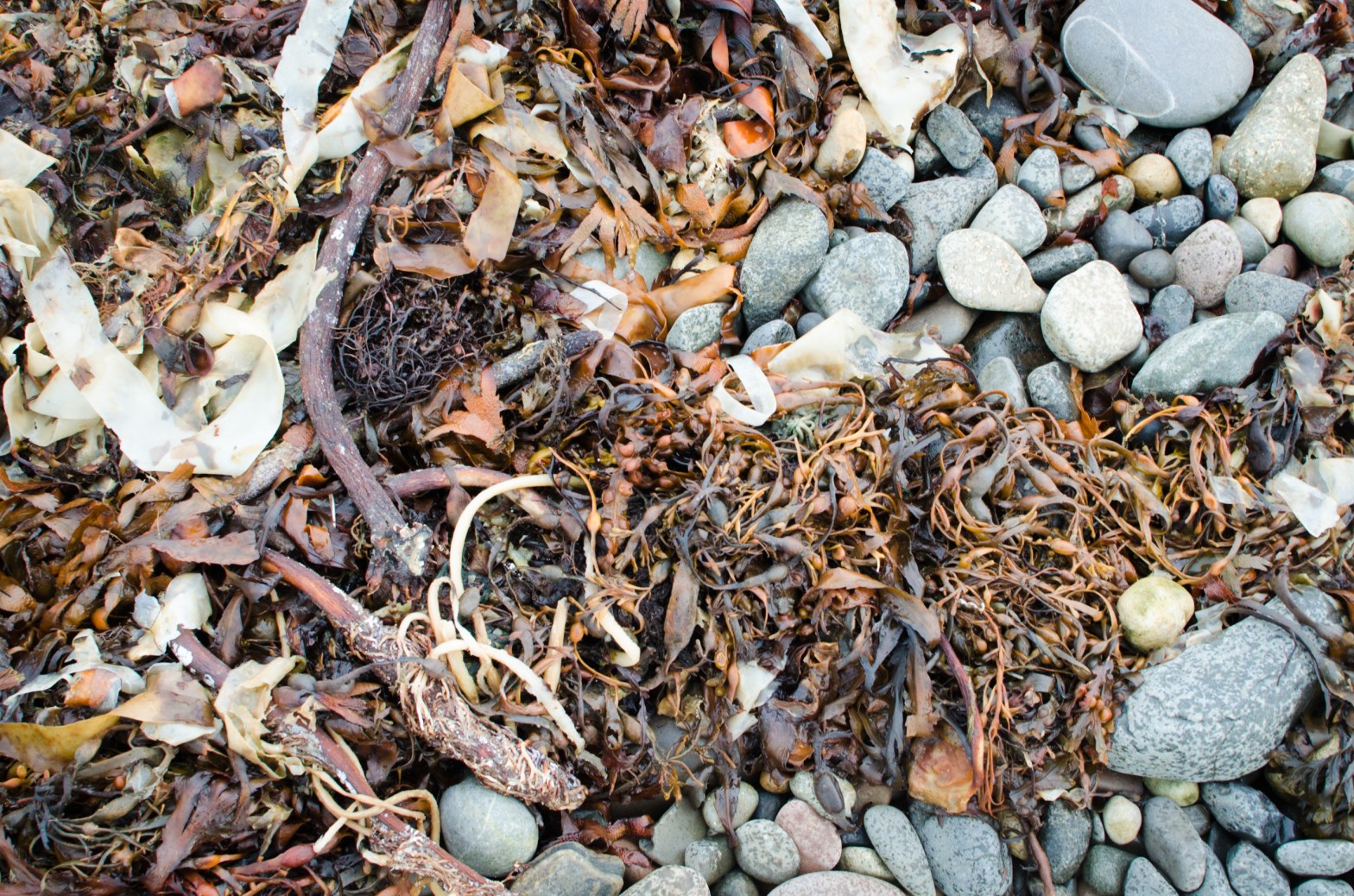
As an article in Vogue  recently announced, bathing in green juices rather than drinking them is set to be the new beauty trend. Yes, you heard right – that slimy green stuff that everyone avoids in the sea is now going to be found floating in people’s baths…

I’m not one for a post about beauty, but I was honestly incredibly excited when this news (you can also find a print article in Vogue’s April issue) arose, as I’ve been using seaweed to treat my problem skin for over five years. Seaweed contains a long list of vitamins, one of which is the magical B-12, an anti-inflammatory, making it a particularly wonderful product for treating eczema, rosacia and acne.

The slimy green stuff also has many other health benefits, being high in protein, iodine (which helps the functioning of the thyroid) and mineral content – it even contains more vitamin C than oranges, according to Livestrong.

I personally cannot recommend seaweed as a treatment for skin enough.

From the ages of 11 to 14 I suffered with painful, irritating eczema over my body and face, which meant I could only use water to wash, and couldn’t wear makeup or materials other than cotton. After trying medicinal creams from a GP, some very dodgy looking tea (just imagine something like a forest floor) from a Chinese herbalist and even a Christian healer who prayed in Bath city centre for my recovery, I was starting to give up hope.

One day, however, whilst on a family holiday in York, we came across an Irish man selling a product called Aalgo, pots of powdered seaweed. He claimed that seaweed was brilliant for the skin and would be able to heal my eczema in no time. Safe to say, after my less than successful experiences with herbal remedies (I never finished a cup of that tea), I was sceptical. Nonetheless, we walked away with a large plastic pot embalmed with a mermaid and tried it out as soon as we got home.

Within the year, my eczema completely cleared.

Despite the off-putting smell of seaweed bathwater (it doesn’t linger, by the way), I took regular 20 minute baths over the course of about 3 months, as well as mixing the powder with water to make a face mask, something I still do.

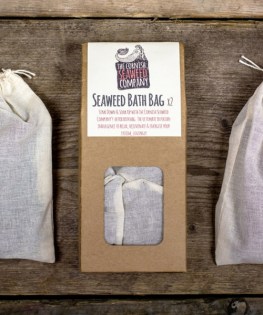
Seaweed will always be something of a miracle plant for me, and I’m living proof of its healing properties. My favourite product is Aalgo. The website allows you to buy different sized pots of the powder, and it’s so easy to sprinkle into a bath or mix with water fir a thicker paste. The seaweed face mask by Lush is also a godsend if you don’t really feel like getting your hands dirty  by making your own. Other popular companies selling seaweed properties are The Cornish Seaweed Company and Creme de La Mer (although the latter requires a significantly larger budget).

This isn’t a sponsored post – you can take it from me. Seaweed truly does have amazing properties, so get yourself down to the beach as soon as you can.

0000077_aalgo-bath-babies-and-toddlers_300 Aalgo Seaweed Powder, £21

2752.pngLush ‘BB Seaweed’ face mask, £6.75

SeaweedBathBags Cornish Seaweed Company ‘Seaweed Bath Bag’, £10.50
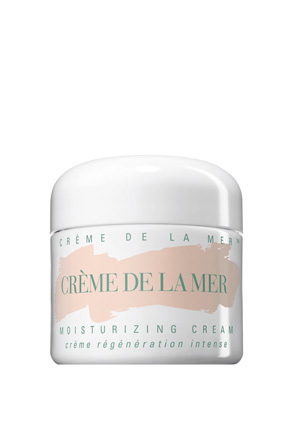
3328_lgCreme de La Mer face cream, £108

Ballet is the New Black

Fashion and dance are my two loves, and so it made sense for me to be totally captivated by Valentino’s AW/16 collection, which was shown at Paris Fashion Week on March 8.

Designers Maria Grazia Chiuri and Pierpaolo Piccioli appear to have taken inspiration from the elegant style of the ballet, both those who dance, and those who watch. The show was abound with tulle, ribbon-style belts, synched waists and bardot necklines, creating elegant elongated silhouettes that practically floated down the catwalk.

To start off, however, the designers showcased a much darker version of the ballet look, with only tight buns and tulle skirts nodding towards their elegant inspiration. A tougher, more gothic and streetwise take on the ballerina was brought to life through the monochromatic colour scheme, with biker boots, leather bags and jackets, and long, oversized coats adding to the aesthetic.

Following a grittier start, the show proceeded to display more obviously ballerina-inspired looks, as black biker boots evolved into nude, sheer dresses featuring plunging  necklines and delicate embellishment. The shapeless black coats became floor sweeping numbers in khaki, rose, merlot and camel shades – functional, but nonetheless offering an elegant simplicity as well as drawing attention to the elongated silhouettes of the dancer muses.

Feathers are furs were also out in full force. A fur bolero jacket draped over a sheer white gown evoked the image of the lady-who-lunches, just on her way to watch the New York Ballet’s latest production of A Midsummer Night’s Dream. The prima-ballerina was similarly captured in a beautiful feather and tulle gown, suggesting some serious Swan Lake vibes.


Despite playing off the classic prima-ballerina look against that of the dark, risk-taking black swan throughout, the show ended with a homage to the more traditional ballerina. A nude gown with sparkling silver embellishment and a wrap style neckline with cami straps graced the catwalk, something which wouldn’t have looked out of place if the model happened to be Uliana Lopatkina taking her final bow.

It was as if Chiuri and Piccioli had transported their audience to the theatre – their inspiration was clearly distinguishable, and their contrasting of gothic and girly certainly paid off.

This slideshow requires JavaScript.

Designer on the High Street

The A/W15 fashion shows displayed some easily wearable but nonetheless elegant trends, from delicate camisoles and midi skirts from Gucci to retro-style ankle boots from Dior. I you’re anything like me, the designer world of fashion seems just that-a completely different world-and it can be difficult to understand how to replicate some of the trends within an everyday setting, or find key pieces that won’t break the bank.

Luckily, the latest AW/15 range from Topshop has particularly captured the catwalk styles in pieces that wouldn’t look out of place on the high street, and certainly do not come with the designer prices. The similarity between the high street and designer pieces is almost uncanny, and even if they don’t come with a designer label, there won’t be any doubt that you’ve managed to capture the latest looks from catwalk.

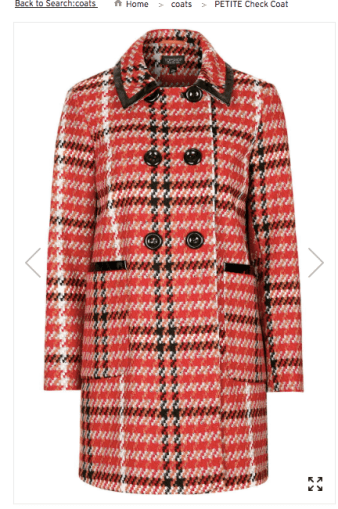
Take, for example, Miu Miu’s red and black dogtooth coat with snakeskin pockets and cuffs and double-breasted buttons. Capturing a ‘Mad Men’, sixties secretary vibe, this coat came it at £2439 – well above the budget of most people, unless you happen to be the actual Don Draper.

Miu-Miu-red-check-coat-AW15-e1442588175242

But, have no fear, if you lust after this coat as must as you do after Jon Hamm, Topshop does a similar, but a far cheaper version at £89 – so you can still channel that Miu Miu catwalk look, just not at Miu Miu prices.

Screen Shot 2015-11-21 at 22.41.40.png

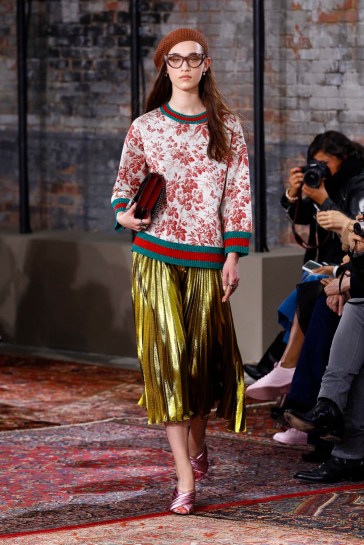
Gucci also released a retro-feeling AW15 collection this year, featuring grandma-style pleated midi-skirts in muted and metallic colours. Seen on the likes of Alexa Chung and in many high-street stores, these are set to become a wardrobe staple. At £745, these again come with a designer price.

gucci-062-1366.jpg

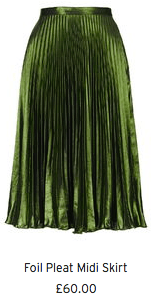
Yet again, Topshop have come to the rescue with an almost identical midi skirt at only £60. Screen Shot 2015-11-21 at 22.48.25

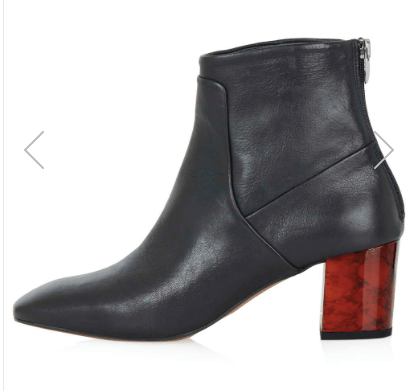
Dior also seems to have inspired Topshop with a nod to the late sixties and early seventies through their range heeled ankled boots (£780 a pair).

f852ee06e5ef6b91af3ab701329d4b14

Again, Topshop come to the fore, capturing the retro style but at high street prices. These heeled ankle boots are a more affordable £79 and come in a range of colours, heel materials and sizes, allowing you to get the designer look with out forking out.

Screen Shot 2016-02-22 at 11.22.53.png

So if you’re looking to keep up to date with the latest in fashion and a fraction of the prices, look no further than your local high street for all your “designer” (well, pretty much) needs.


The Pointlessness of University Careers Fairs

With the second year of my degree comes the pressure to start making decisions about my future career. After a matter of days of being back on campus, I was inundated with emails inviting me to the various careers fairs organised very helpfully by the University on behalf of their promising students. My friend has written her own response for our student newspaper, which you can check out here

I never really knew (and still don’t) what I wanted to be when I grew up. There were so many options: author, actress, police woman, editor, neurologist, detective, journalist, marine biologist – these being just some of the many careers I’ve daydreamed about throughout my life. And so when it came to choosing my degree, I went with what I was best at and enjoyed the most – English. An arts degree, I thought, would give me a wide range of careers options for the future, despite the wincing looks and comments of “Not very practical, is it?” I got – and still get – from people when I told them what I would be studying.

However, from what my friends and I found at the careers fairs, I seem to have been sadly wrong about this. I decided to really get my act together this year and to start thinking seriously about my options for the future, rather than daydreaming about accepting my Oscar or becoming a world-renowned, risk-taking journalist. So my friends and I made the journey from our student house onto campus, where we were ushered into a conference room filled with an array of stalls representing different companies and organisations, like a really dull fairground for ambitious people.

But after circling the room, we soon found that the only stalls directed
at English students were companies offering teaching experience or law, echoing that one question that haunts those studying my degree: “So, you want to become a teacher?”

tumblr_ms9yaeS0sZ1qh12lfo1_r1_500

The dichotomy between arts/humanities students and science students is apparent at most universities, often coming in the form of teasing that those studying for a BSc are doing the “real” degree. Whilst this is mostly lighthearted (apart from when arguments about buying books ensue), it was discouraging to see that this attitude has leaked into the more serious world of careers, and though there was plenty on offer for those interested in law firms, banking or teaching, the whole fair seemed pointless for anyone studying for an arts degree, so much so that my friend wrote an article about it in our student paper.

My university is  currently in the top ten for English Literature in the UK, so it seems odd that the careers fair didn’t reflect the various and diverse careers available in the subject after graduating. I know my degree isn’t as “practical” as those which point to a particular career path, such as Law or Medicine, but this isn’t a good enough reason for the under-representation of arts-related careers. I would be wrong to say that arts degrees were the only ones under represented – those wishing to go into the field of scientific research would also have found next to nothing on offer.

If we want young people to think seriously about their careers options and ensure they find employment or an alternative such as further study, we need to ensure that they are exposed to a wide and unbiased range of possibilities. In 2014, The Independent stated that there were 18,000 graduates still unemployed six months after finishing their degree and from the limited choices available at the careers fair, I’m starting to see why.

Consider this a call to all universities to expose all of your students to as many career opportunities as possible. We are the future, after all.